
(Blog) [Ecommerce · Mobile Apps · UAE · Checkout · Order Tracking · Dubai]
Best Ecommerce Mobile App Features for UAE Shoppers: Cart, Checkout and Order Tracking Done Right
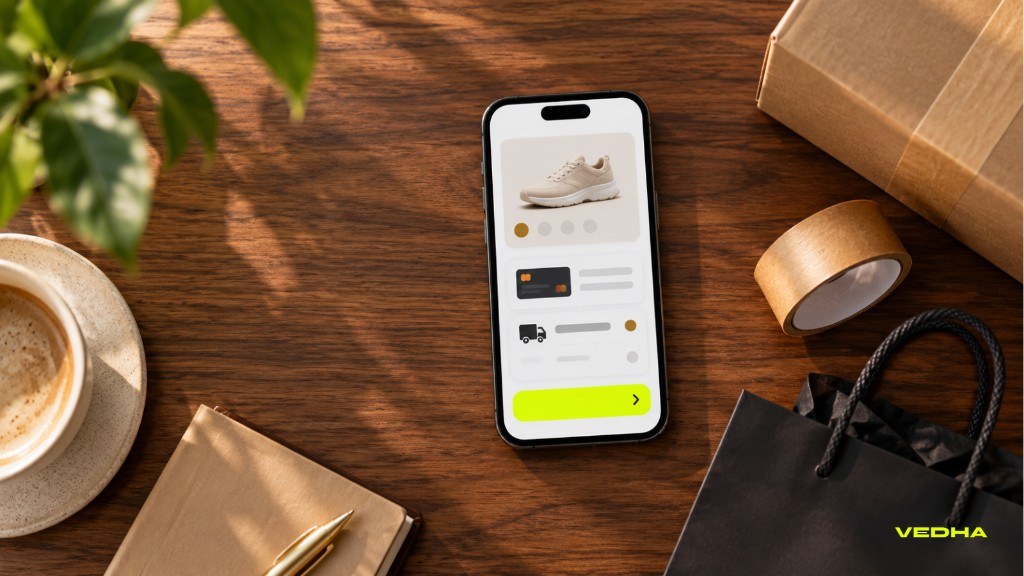
When someone shops through your mobile app, they aren’t thinking about individual features. They’re simply trying to find the right product, pay without friction and know when their order will arrive. If any part of that journey feels confusing, they might abandon the purchase before it’s complete.
That’s why choosing ecommerce mobile app features is a commercial decision, not just a product checklist. For UAE retailers, the experience also needs to reflect local payment preferences, delivery expectations, Arabic and English content, AED pricing and the systems that manage stock and fulfilment. This guide explains what to prioritise for launch and how to build an app that supports both shoppers and the wider business.
Quick answer: The most important ecommerce mobile app features are fast product discovery, clear product information, a transparent cart, guest checkout, secure payment options, delivery estimates, order tracking, push notifications, returns and customer support. For UAE shoppers, businesses should also consider AED pricing, Apple Pay and Google Pay, suitable local payment gateways, BNPL options such as Tabby or Tamara, Arabic and English UX, and logistics integrations.
What do UAE shoppers expect from an ecommerce app?
UAE shoppers expect convenience, payment choice, delivery visibility and a clear path from product discovery to completed order when using Ecommerce apps in Dubai.
- Convenience on mobile: Make the main journey easy to use on a phone. Include fast search, useful filters, clear product information, saved addresses and a persistent cart where appropriate.
- Trust before payment: Show stock status, delivery timing, seller information, return terms and the full price, including delivery charges and VAT where applicable. Make payment errors clear and easy to resolve.
- Visibility after purchase: Confirm orders immediately and show meaningful updates from payment through delivery. Keep returns and support accessible from the order record.
What is the essential ecommerce app journey?
The essential journey connects five stages: discovery, cart, checkout, fulfilment and post-purchase support.
| Stage | Customer need | Important features |
|---|---|---|
| Discover | Find and evaluate products | Search, filters, categories, product details and reviews |
| Cart | Review the purchase | Quantity controls, stock updates, coupons and delivery estimate |
| Checkout | Pay with confidence | Guest checkout, saved details, wallets, cards and BNPL |
| Fulfilment | Know what happens next | Confirmation, notifications and delivery tracking |
| Post-purchase | Resolve issues easily | Returns, refunds, support and reorder options |
The app should pass information between each stage. A product added to the cart should reflect current stock, delivery availability and the correct price before the customer reaches payment. If the app and the backend disagree, customers lose confidence quickly.
How should the cart be designed?
A good ecommerce app cart gives shoppers confidence before they commit to payment.
- Show the full cost early: Display product prices, quantities, discounts, delivery charges, VAT where applicable, the final AED total and the estimated delivery window.
- Make changes easy: Let customers update quantities, remove products, save items for later and return to product details without losing their cart. Explain any stock or price changes clearly.
- Support useful actions: Add wishlists, recommendations, delivery options, gift features, subscriptions or cart recovery where they suit the product and fulfilment model.
Do not add every possible option by default. The right cart depends on product type, order frequency, average order value and fulfilment model.
What makes mobile checkout work?
Mobile checkout works when it removes unnecessary decisions while keeping the customer informed. Every field and screen should have a clear purpose.
- Use guest checkout: Let customers buy without creating an account, then offer account creation after purchase. Returning users can benefit from saved addresses, secure payment tokens and biometric authentication.
- Offer relevant payment methods: Assess payment methods such as Visa and Mastercard, Apple Pay, Google Pay, local gateways, Tabby or Tamara where appropriate, and cash on delivery for suitable products or customer groups.
- Handle payment failures properly: Explain the problem in plain language, allow customers to retry or choose another method, and preserve the order and cart state throughout the process.
Payment states need to be handled in the backend as well as the interface. Otherwise, customers may see duplicate orders, delayed confirmations or unclear refunds.
How should order tracking work?
Order tracking should reflect real fulfilment events rather than display a decorative progress bar. The app needs accurate information from the order-management and logistics integrations.
- Use meaningful order states: Show stages such as order received, payment confirmed, preparing, packed, with the courier, out for delivery, delivered, delayed or returned.
- Send useful notifications: Use push notifications for payment confirmation, dispatch, delivery updates and post-delivery feedback. Give users control over promotional messages.
- Handle delivery exceptions: Support failed delivery attempts, address corrections, rescheduling, delays, partial fulfilment, damaged products, returns and refunds.
If a courier provides location tracking, add it when it improves the experience and can be maintained accurately. An inaccurate map or outdated status creates more frustration than a simple, honest delivery update.
Which UAE-specific features matter?
A UAE ecommerce app should reflect local language, payment, delivery and commercial requirements from the beginning.
- Arabic and English experiences: If Arabic-speaking shoppers are part of your audience, plan RTL layouts and bilingual content early. Product details, filters, validation messages, notifications and support flows all need to work in both languages.
- Local pricing and tax information: Show AED prices where appropriate, make VAT treatment clear and ensure invoice data stays consistent between the app, commerce backend and finance system.
- Delivery and returns: Make delivery windows, address details and return requests easy to manage from the order record rather than sending customers to a separate support process.
- GCC expansion: If regional growth is planned, account early for currencies, languages, delivery rules, tax treatment, stock allocation and country-specific payment methods.
Localisation is more than translating a few labels. It affects product content, checkout logic, fulfilment rules, customer communication and support.
Which features should launch first?
Prioritise features according to the business model and customer journey. Do not treat every possible feature as a launch requirement.
| Feature group | Include at launch when | Examples |
|---|---|---|
| Commerce essentials | Every B2C shopping app needs them | Catalogue, search, cart, checkout, payments and order management |
| Customer confidence | Delivery and returns affect purchase decisions | Stock status, delivery estimate, tracking and returns |
| Growth features | The business has enough traffic and data | Recommendations, loyalty, abandoned-cart automation and segmentation |
| Complex commerce | The operating model requires it | Marketplace sellers, B2B pricing, subscriptions and multi-warehouse inventory |
For most retailers, the first release should make the core purchase journey reliable. Personalisation and loyalty can improve repeat purchase once the business has meaningful behavioural data.
A practical launch scope usually includes the catalogue, search, product pages, cart, checkout, payment, order confirmation, order history, delivery updates and support. Features such as recommendations, loyalty, subscriptions or marketplace management can follow when the business has validated demand and collected enough data to support them.
What systems sit behind the ecommerce app?
The app is only one part of the commerce stack. A reliable implementation usually connects:
- Commerce backend or custom commerce platform.
- Product catalogue or product information management.
- Inventory or ERP.
- Payment gateway.
- Courier and fulfilment systems.
- CRM and customer support.
- Analytics and loyalty platforms.
If the catalogue, stock or delivery status is inaccurate, a polished app cannot repair the customer experience. Integration design should therefore happen before the mobile interface is finalised.
For complex catalogues, pricing rules or omnichannel journeys, a custom commerce platform may provide more control than extending a packaged store indefinitely. This can be particularly useful when a retailer needs multiple price lists, multi-warehouse fulfilment, B2B ordering or different experiences across the UAE and wider GCC.
How Vedha can help
Vedha designs and builds ecommerce apps for organisations in Dubai and across the UAE, covering customer journeys, cart and checkout UX, iOS and Android development, payment, inventory, CRM and logistics integrations, order tracking, returns, customer accounts, commerce analytics and conversion improvement. See Vedha’s E-commerce Solutions for the wider platform and fulfilment capabilities that support the app.
If you’re planning an ecommerce mobile app for UAE shoppers, book a free consultation with Vedha to map the customer journey, integrations and feature priorities before development begins.
FAQs about ecommerce mobile app features
What features should an ecommerce mobile app have?
An ecommerce mobile app should include product discovery, search and filters, product details, cart management, checkout, secure payments, order management, delivery tracking, notifications, returns and customer support. The exact feature set depends on the business model and fulfilment process.
Which payment methods should a UAE ecommerce app accept?
A UAE ecommerce app should assess cards, Apple Pay, Google Pay, local gateway options and BNPL providers such as Tabby or Tamara. Cash on delivery may also be appropriate for selected products or customer segments.
Should an ecommerce app support Arabic and English?
It should if the target audience includes Arabic-speaking shoppers or the business plans regional growth. Arabic support needs more than translation because RTL layout, product content, checkout messages and notifications must be designed and tested properly.
How does real-time order tracking work in an ecommerce app?
Real-time tracking works by connecting the app and commerce backend to order-management and logistics systems. The app then displays meaningful fulfilment states such as confirmed, packed, dispatched, out for delivery and delivered.
How can an ecommerce app reduce cart abandonment?
Reduce abandonment by using guest checkout, clear total pricing, fast payment methods, saved details for returning users, reliable error handling and visible delivery information. Cart recovery notifications can support the journey after a customer leaves.