
(Blog) [Loyalty Apps · Mobile Development · Retention · Dubai · UAE]
Loyalty App Development in the UAE: Designing Loyalty and Rewards Apps That Drive Retention
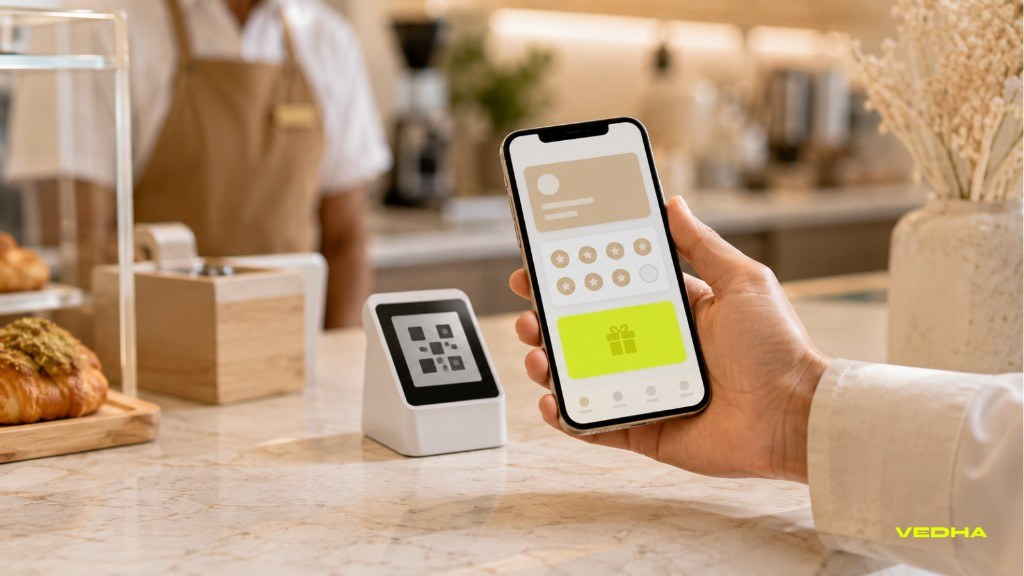
What keeps a customer coming back? Bain & Company found that lifting retention by just 5% can raise profits by 25% to 95%, which is why so many UAE brands are investing in loyalty. But loyalty app development in the UAE stalls when the app is treated as a points tracker rather than a retention system, one that ties rewards, transactions, customer data and business rules to a clear goal. This guide helps you design that system, and choose the right way to deliver it, before you invest.
Quick answer: Start with the behaviour you want to change, more visits, higher spend, better retention or referrals, then pick the right delivery for it. Businesses have several options, from a full custom app to a loyalty feature in an existing app, a wallet pass or a QR programme, so the best fit depends on your goal and your customers.
Why UAE businesses are investing in loyalty technology
Loyalty technology supports repeat purchases, retention, personalisation, referrals and targeted offers, and the UAE's mobile-first customers respond well to it across retail, restaurants, hospitality and leisure.
The important distinction is between a loyalty programme and a loyalty app. The programme defines the commercial rules; the app or platform delivers the experience. Get the rules right first, then choose the delivery.
Start from the behaviour you want to change. A good programme usually aims to:
- Increase repeat purchases and visit frequency.
- Encourage higher-value transactions.
- Reactivate inactive customers.
- Reward referrals and engagement.
- Build a first-party customer database.
- Create cross-selling between locations or brands.
One caution: customers may not want yet another app. That makes wallet passes, QR enrolment, web apps and embedded loyalty features genuine alternatives, not fallbacks. A standalone app earns its place when you have frequent interactions, a large member base, complex rewards or a wider digital roadmap.
Build, buy, integrate or use a wallet pass?
There is no universal best option. The right route depends on adoption, reward complexity, integrations, budget and how much control you need.
| Approach | Best for | Main advantage | Main limitation |
|---|---|---|---|
| Custom loyalty app | Large, differentiated or multi-brand programmes | Maximum control and flexibility | Higher build and maintenance |
| Ready-made loyalty software | Small and medium businesses | Faster launch, lower complexity | Less control over experience and rules |
| Loyalty feature in an existing app | Brands with an established app | Uses an existing user base | Limited by the existing app |
| Wallet pass or QR programme | Simple rewards, memberships and offers | Low customer friction | Weaker for complex engagement and analytics |
- Choose a custom loyalty app when you run multiple brands or outlets, your reward rules are complex, the app must connect to POS, CRM, ERP, ecommerce and payments, or the programme is a strategic customer-data asset.
- Ready-made software is enough when the programme uses simple points, stamps, discounts or memberships, you need to launch quickly, or you are still testing demand with a small base.
- Wallet-based loyalty is better when customers visit occasionally and resist downloads, the core need is a digital card, coupon or points balance, and onboarding through QR codes, Apple Wallet or Google Wallet keeps friction low.
Loyalty app features and industry use cases
Features should serve a retention strategy, not inflate scope. It helps to separate what customers see from what the business runs behind it.
Core customer-facing features:
- Digital membership and account creation.
- Points, stamps, cashback, coupons and vouchers.
- Tiers and VIP benefits, plus referral rewards.
- Personalised offers and push notifications.
- QR earning and redemption, and digital wallet passes.
- Reward history, balance tracking and a store locator.
- Arabic and English experiences where required.
Admin and business features:
- Reward-rule and campaign configuration.
- Customer segmentation and outlet or staff permissions.
- Redemption validation, refunds and points-reversal controls.
- Fraud detection.
- Customer and transaction dashboards with exportable reports.
Use cases vary by industry:
- Restaurants and cafés: reward repeat visits, push off-peak orders and tie points to POS transactions.
- Retail and ecommerce: points, referrals, personalised offers, abandoned-cart recovery and repeat-purchase campaigns.
- Hospitality and leisure: tiers, privileges, memberships and cross-brand benefits.
- Gyms, salons and clinics: reward visits, renewals, referrals, packages and reactivation.
- Multi-brand groups: earn and redeem across participating brands or outlets.
Integrations and loyalty programme architecture
A loyalty app should never become an isolated database. Customer profiles, purchases, points, redemptions, refunds and balances all have to stay in sync, which means separating the front-end experience from the back-end rules and integration layer.
Key systems to connect through API and systems integration:
- POS and retail systems.
- CRM and customer profiles.
- ERP, finance and payment gateways.
- Ecommerce and ordering platforms.
- Email, SMS, WhatsApp and marketing automation.
- Analytics, identity and access control.
Multi-outlet and multi-brand programmes need more: centralised customer profiles, outlet-level reporting, shared or brand-specific earning rules, cross-brand redemption, staff permissions and real-time transaction synchronisation. For groups running several systems, clean CRM and ERP integrations are what keep one customer's balance consistent everywhere.
On the technical side, plan for authentication and role-based permissions, duplicate-transaction prevention, refund and cancellation handling, API security, monitoring and backups.
Reward economics, costs and performance
A polished app still fails if the reward model hurts margins or does not change behaviour. Settle the economics before development starts.
Reward economics to define
- Points earned per AED spent, and what a point is worth.
- Minimum redemption thresholds and reward expiry.
- Refund and cancellation treatment.
- Tier qualification and downgrade rules.
- Reward liability, breakage and margin protection.
- Rules for partner or cross-brand rewards.
How much does a loyalty app cost in Dubai?
There is no single price for a loyalty app. Cost depends on custom versus ready-made architecture, whether it is a native app, web app, wallet pass or embedded feature, the number of customer and admin experiences, reward-rule complexity, POS, CRM, ERP, ecommerce and payment integrations, multi-outlet structure, Arabic and English requirements, analytics, and security, testing, hosting and support.
How to measure success
Measure the programme, not the download count. The metrics that matter include enrolment and activation rates, repeat-purchase rate, visit frequency, average order value, redemption rate, customer lifetime value, inactive-member rate, referral and campaign conversion, cost per retained customer, and revenue attributable to members. Connecting the app to data and business intelligence turns those numbers into decisions.
How Vedha approaches loyalty app development
We start with discovery and programme requirements, map the customer journey from enrolment to earning, redemption and re-engagement, then choose the right architecture, a custom app, wallet pass, embedded feature or platform integration. From there we design the customer and admin experiences, build the integrations, test points, refunds, rewards, permissions and edge cases, and launch with analytics in place. After go-live, ongoing app maintenance keeps it monitored, supported and improving.
FAQs about loyalty app development in the UAE
What is a loyalty and rewards app?
A loyalty and rewards app helps customers earn, track and redeem points, discounts, cashback, vouchers, memberships or other benefits. It can be delivered through a standalone mobile app, a web app, an embedded feature, a QR system or a digital wallet.
How much does it cost to build a loyalty app in the UAE?
The cost depends on the app type, reward rules, integrations, number of outlets, design requirements, admin features, analytics and ongoing support. A wallet-based programme and a multi-brand custom application have very different requirements, so the reliable figure comes from scoping your specific programme.
Should a business build a custom loyalty app or use loyalty software?
Both are viable, and the right choice depends on the programme. Ready-made software can handle simple points, offers and basic reporting. A custom loyalty app gives you more: control over the experience, complex or differentiated rules, support for multiple brands and outlets, and deep integration with your systems.
Do customers need to download a loyalty app, and what features should it include?
No. You can use Apple Wallet, Google Wallet, QR codes, web apps or a loyalty feature inside an existing app. Core features may include digital membership, points, rewards, tiers, referrals, coupons, notifications, customer segmentation, admin controls and analytics.
Can a loyalty app integrate with POS and CRM systems?
Yes. A well-designed loyalty platform connects to POS, CRM, ERP, ecommerce, payment, marketing, communication and analytics systems through APIs, webhooks and synchronised data. For multi-outlet businesses it should also support centralised customer profiles, real-time points tracking, outlet-level reporting, staff permissions and flexible earning rules.